-
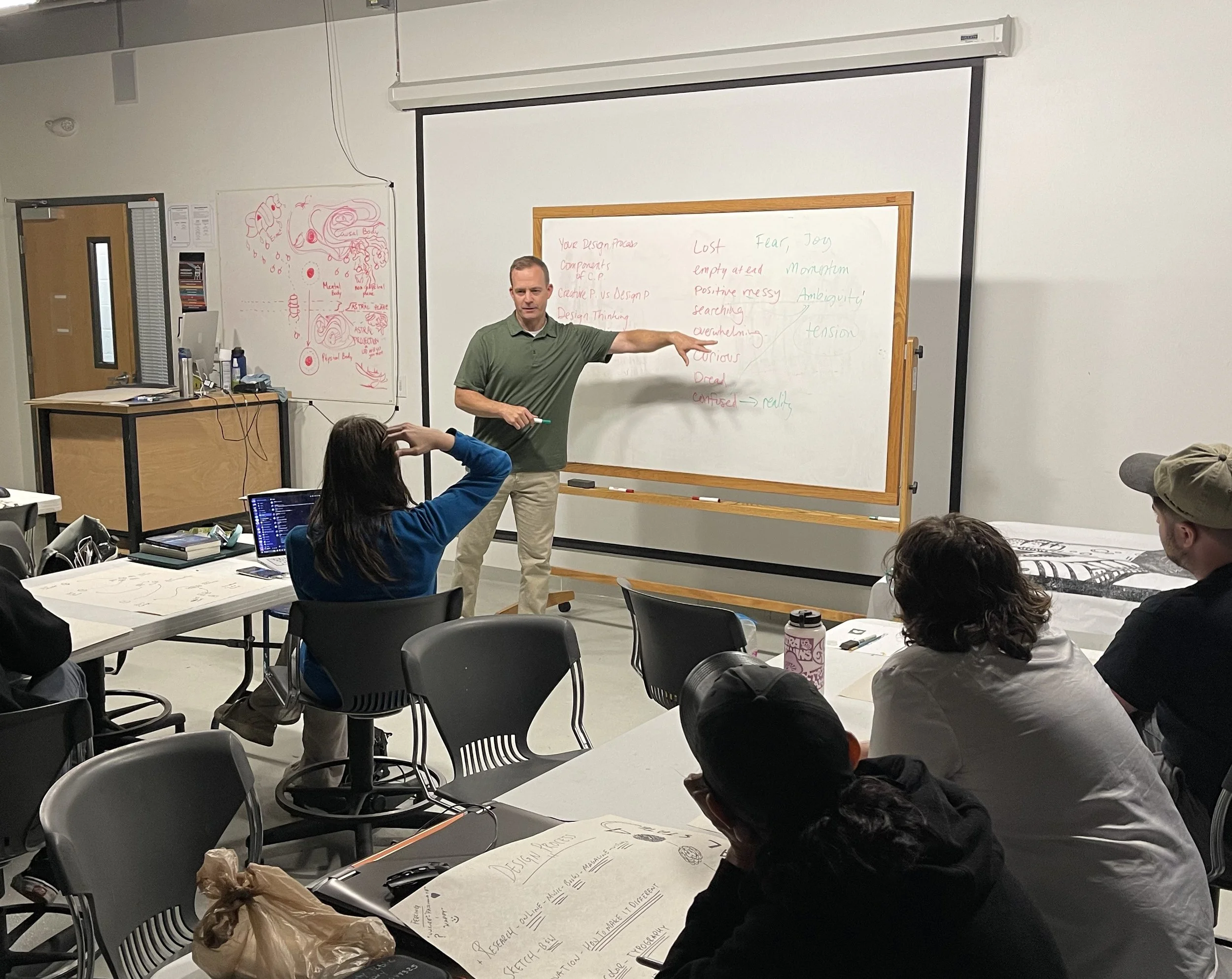
My primary objective as a teacher is to help my students to clarify, trust, and accomplish their vision. To do this, I help them see themselves with great creative potential, understand the context of what they are learning, and define their own vision. I offer broad-based resources and vision-based feedback. I ask the right questions and illuminate the subject with visuals and metaphors. I give them space to work, to ask questions, and to experiment as they apply what they are learning.
The 6 concepts below provide additional detail and examples to clarify my teaching philosophy.
-
In the early stages of the learning experience, my students have two primary concerns. They want to know: 1) What is the point of this course? 2) Do I have what it takes to succeed?
More than just going over the course description or syllabus, I help them see the context of the course, how it fits into the big picture, and how it relates to the discipline, domain, or organization. If there are expectations, components, systems, or processes that they need to understand, I explain them early and often.
It is important for them to be reminded of their unique potential to be successful, in this course and beyond. I get to know them and learn what approach will work best to engage their imagination. I share my vision and help them see themselves with great creative potential.
-
Within the objectives of the course, I give my students the freedom to set their own creative vision and work toward it. I engage them in activities that clarify their vision. I design activities to focus them on what they truly want and remove barriers or preconceived notions about how to achieve it. I encourage them to focus on the results they want (not what I want), and to ignore concerns about the “how” (the means that may be used to accomplish the results). That will come later. Together, we address their fears and validate their creative vision.
-
Once the results have been chosen, the resources needed to accomplish the vision become more apparent. With a clear vision in mind, my students begin to see the relevant information, skills, tools, and other resources they will need to accomplish it. This is the best time for me to teach and offer resources.
My students need broad-based resources to help them understand the field or domain that they are working in. I offer a wide knowledge base of the people, theories, studies, and happenings that are informing our current understanding and conditions. I tell stories, give presentations, require reading, and expect a high level of research.
In addition, I provide information, demonstrate techniques, introduce tools, and teach skills that are vision-based. This means that what I offer is directly related to what the student needs to accomplish their vision. The students are now feeling creative tension, and any tools I can provide to help them leverage it are highly relevant. In addition to instruction, I work to provide timely and pertinent feedback whenever possible. I tailor the feedback schedule and use critiques, responses, and grades to provide feedback at critical stages of their learning.
-
The critical skill of a teacher is knowing the right questions to ask and when to ask them. I might ask a question to assess a student’s knowledge, prompt a discussion, or encourage analysis. I avoid fact-based questions, as those tend to put a student on the spot and focus their mind on retaining facts, figures, or dates. If the question seems too obvious, they might wonder if it is a trick question. Instead, I carefully design each question. To do this well, I consider the purpose of each question I want to ask. It takes time and intention but yields deeper discussions and learning.
In my courses, I am not the only one asking questions. I strive to create a culture that gives space for every question. Students should feel empowered to ask BIG questions and to question the status quo. I design compelling questions to engage their imagination and challenging questions to activate the creative potential that is inherent (but sometimes dormant) in each student.
-
As the pressure of preparing to teach begins to build, I might not feel that there is time to get creative or imaginative with my teaching. I remember that whatever efforts I make to illuminate the subject for my students will be well worth the return on their engagement.
Instead of falling into the trap of text-heavy, linear presentations, I look for engaging ways to use pictures, drawings, videos, prototypes, stories, and metaphors to deliver information.
-
There are certain factors that contribute to learning which seem to be in direct contrast with the structures of the academic classroom or other learning opportunities. Learning often requires failure, practice, and experimentation. Ironically, grading and evaluating performance often discourages this type of exploration. In my classrooms, I find a way to reward students for growth, not for outcomes. As a result, I show them that I value learning and innovation over proficiency.
Finding the right methods and learning the appropriate skills to accomplish their vision is often a matter of experimentation. However, students gravitate to their comfort zones, being afraid to make mistakes and receive a poor grade. To counter this, I create a culture of innovation where experimentation is rewarded, even celebrated. This gives them freedom to take risks and explore.

In-class demonstrations are a regular part of my teaching practice. I have saved a few of them over the years.
Academic Demos

See my Student’s Work!
I have taught a range of post-secondary courses, from freshman foundations to senior portfolio.